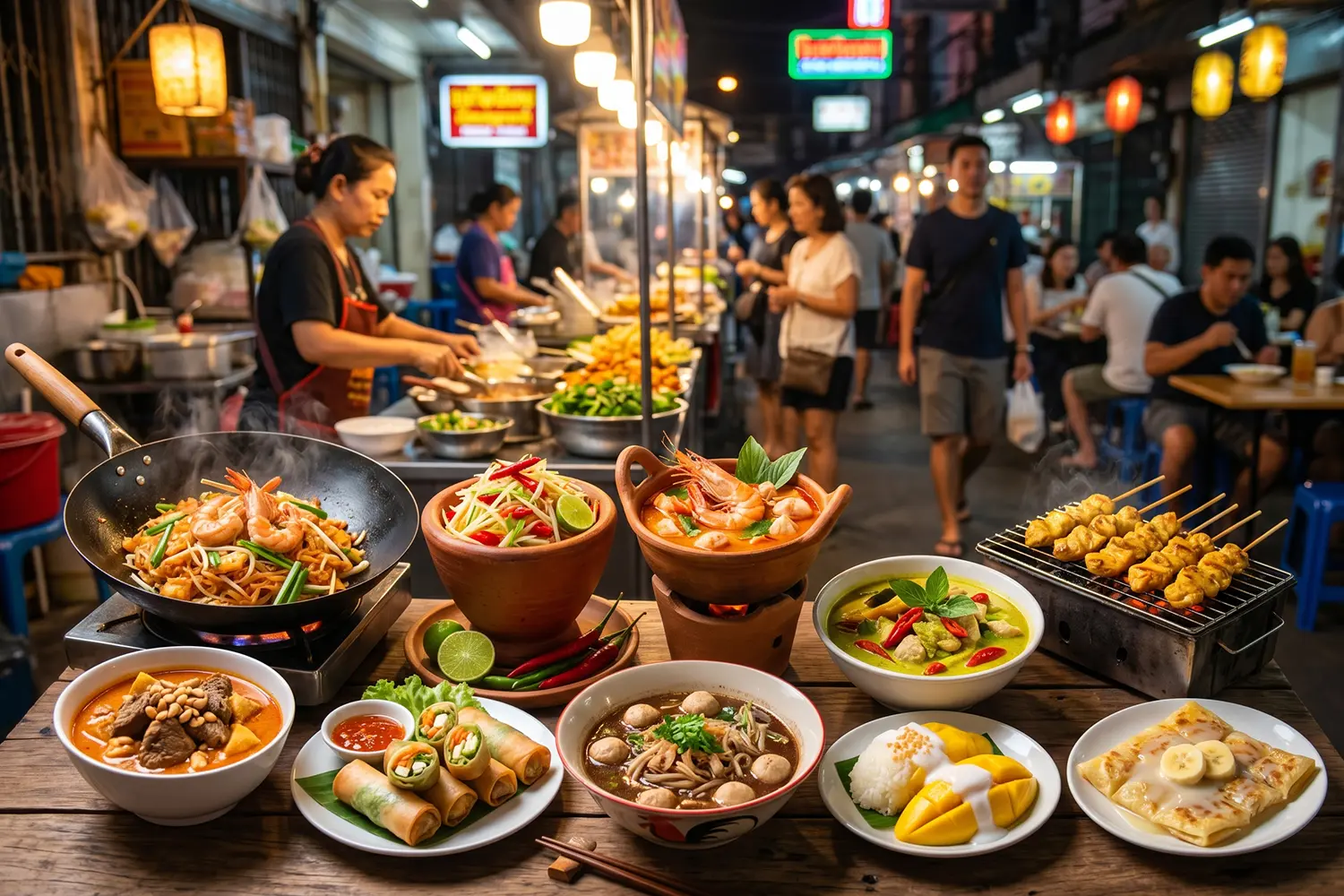
The Real Thai Street Food Power List: Beyond the Tourist Trap
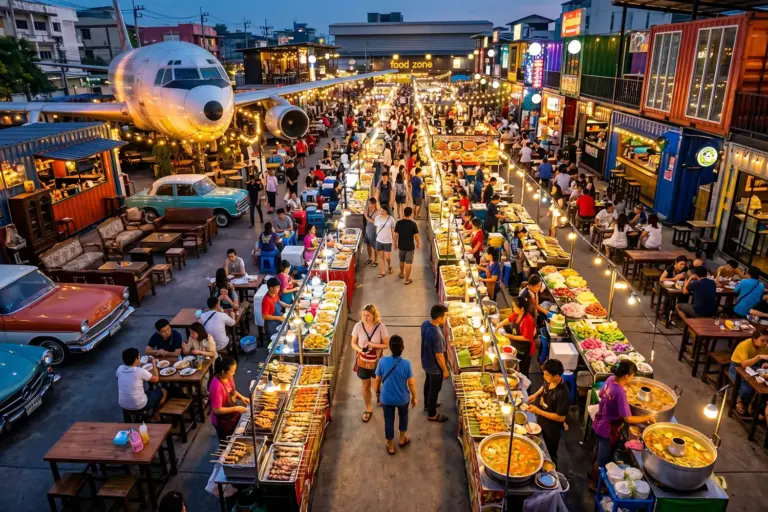
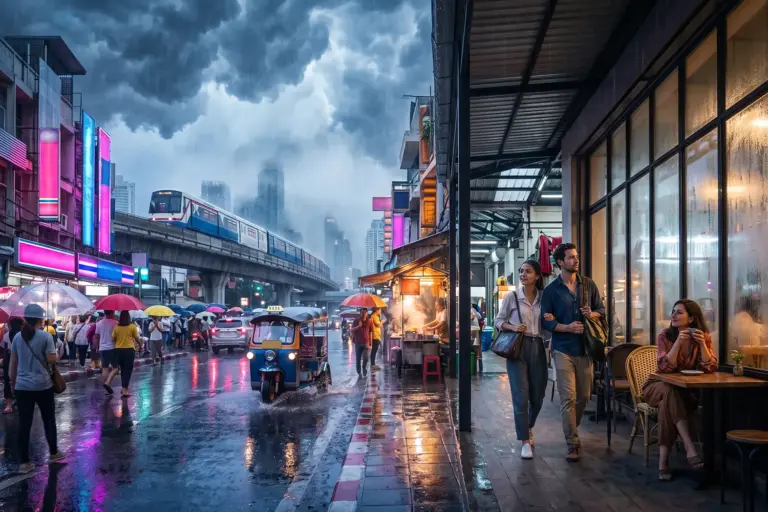
Walking through Yaowarat (Chinatown) or Banthat Thong after sunset, you’ll realize that street food in Thailand isn’t just a convenience—it is the country’s primary social fabric. While many global lists lean on generic “Pad Thai” entries, the true street-level experience is found in the smoke of charcoal grills and the rhythmic thud of a wooden pestle.
This guide moves past the basic recommendations. We are looking at the heavy hitters that locals actually queue for in 2026, including the specific Thai names you need to know and the current pricing you should expect to pay at a standard stainless-steel table.
1. Phat Kaphrao (ผัดกะเพรา)
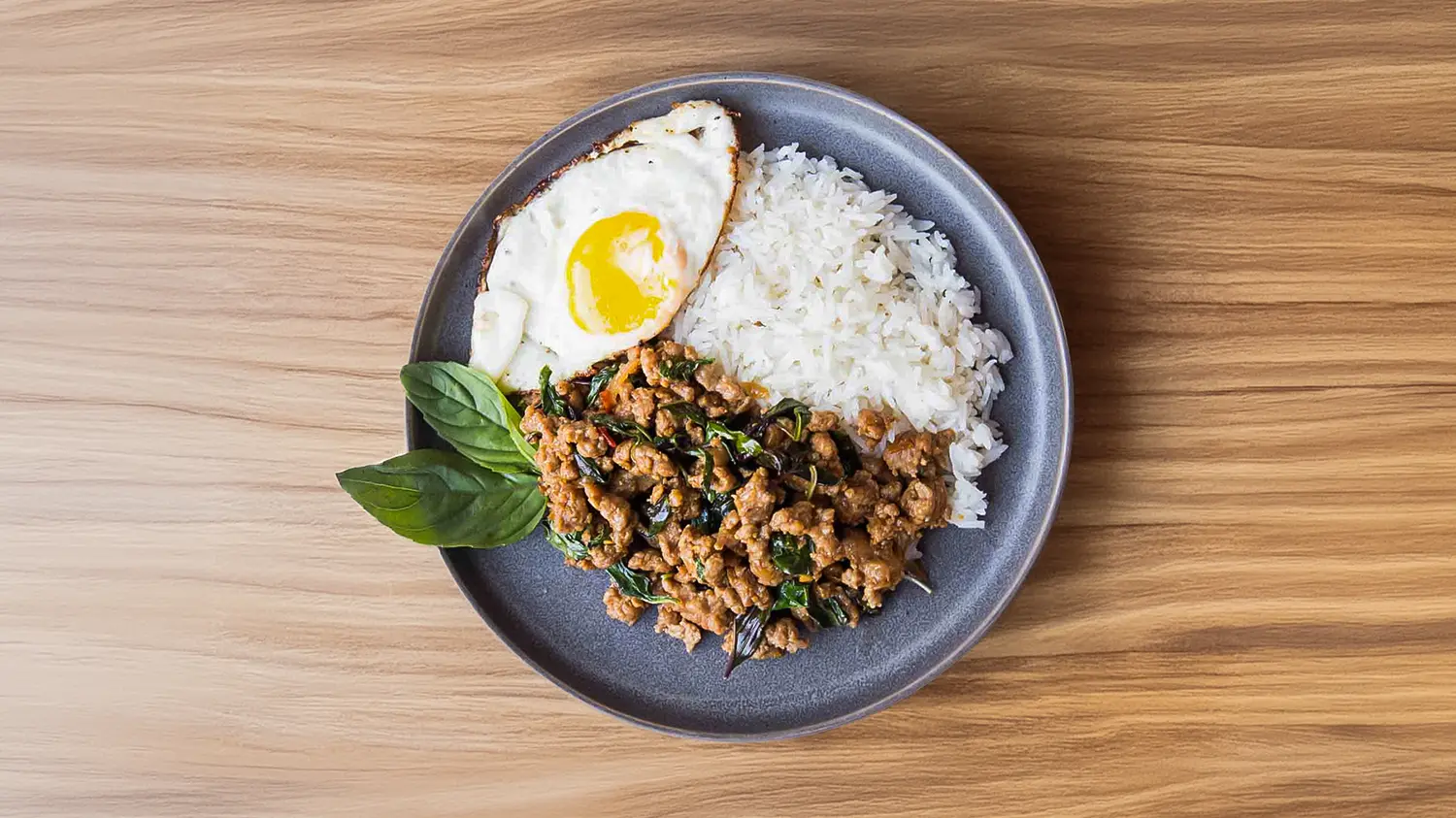
Phat Kaphrao is the undisputed “national dish” of the Thai working class. While tourists flock to Pad Thai, locals eat Kaphrao. It is a high-heat stir-fry of minced meat (usually pork or chicken), garlic, bird’s eye chilies, and—crucially—Thai Holy Basil (not sweet basil).
- The Experience: A proper street Kaphrao should be “dry,” not swimming in sauce.
- The Pro Move: Always order it with a Kai Dao (crispy fried egg). The creamy yolk cuts through the intense heat of the chilies.
- Price: 50–70 THB ($1.40–$2.00) at most roadside stalls.
2. Guay Tiew Reua / Boat Noodles (ก๋วยเตี๋ยวเรือ)
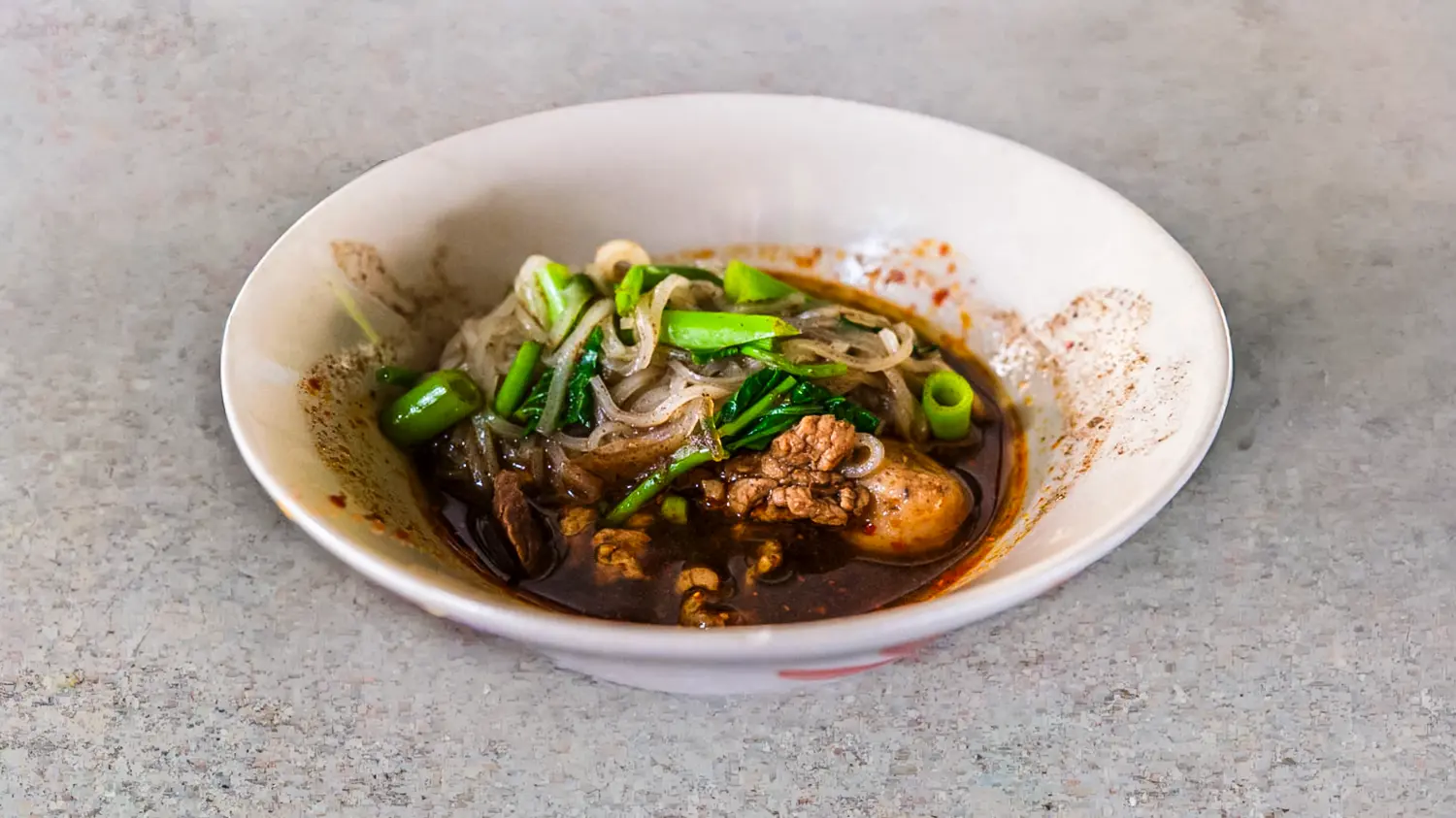
Boat Noodles are small, flavor-packed bowls of noodle soup originally sold from boats along the canals of Central Thailand. The broth is dark, rich, and thickened with a splash of pig or cow blood (don’t let that deter you; it adds a deep, savory creaminess).
- The Experience: The bowls are tiny (about 3-4 bites). It is tradition to stack your empty bowls high.
- Where to find them: Victory Monument in Bangkok remains the spiritual home of the “Boat Noodle Alley.”
- Price: 15–20 THB per bowl. You’ll likely need 4 or 5 to feel full.
3. Som Tum (ส้มตำ)
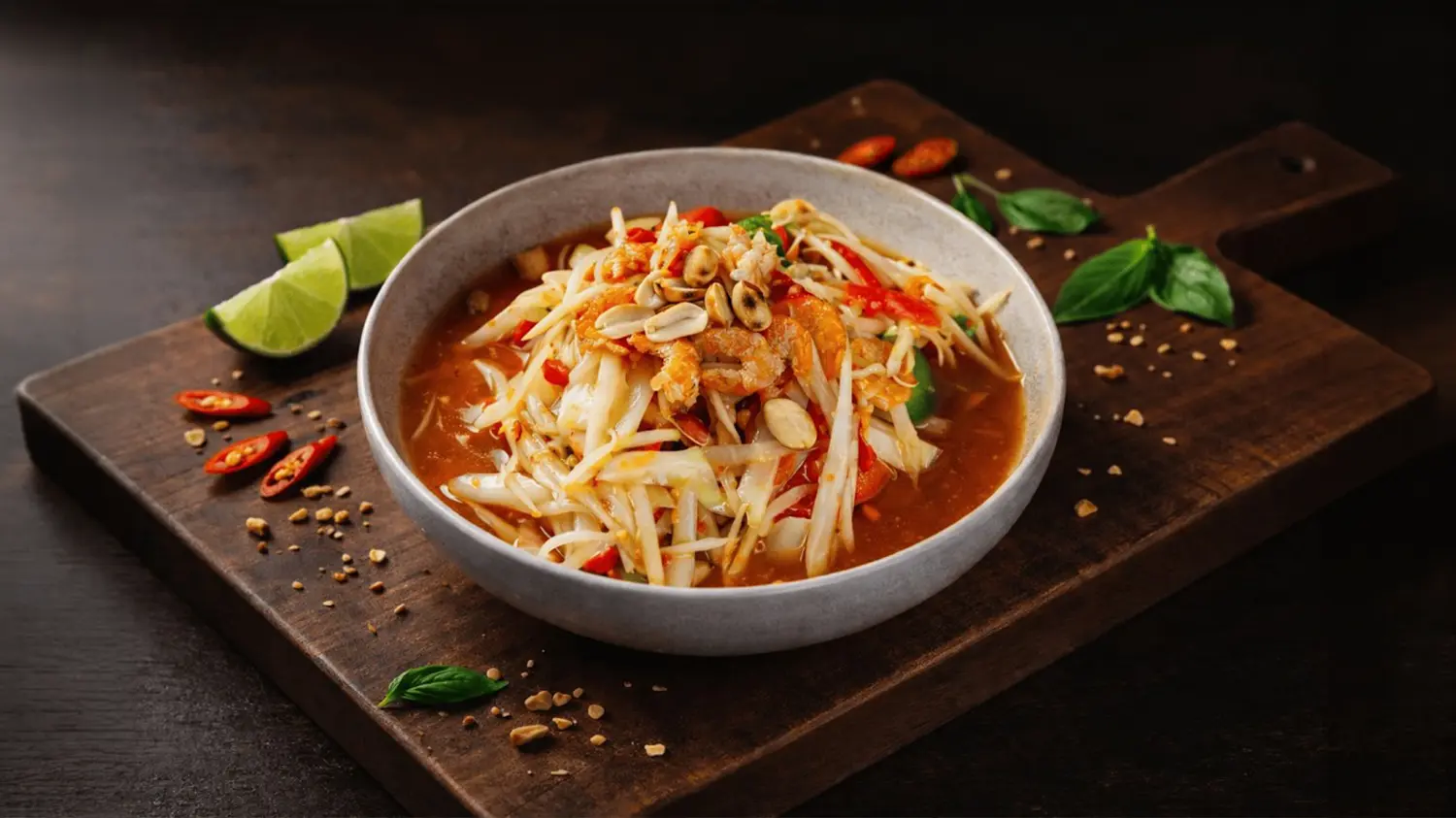
Som Tum (Green Papaya Salad) is the heartbeat of Isan (Northeastern) cuisine. It is a masterclass in Thai flavor balancing: sour (lime), spicy (chili), salty (fish sauce), and sweet (palm sugar).
- The Nuance: First-timers usually get Som Tum Thai (with peanuts). However, for a deeper, funkier experience, try Som Tum Pu Pla Ra—which includes fermented fish sauce and small salted crabs.
- Essential Side: You must eat this with Khao Niew (Sticky Rice) to soak up the juices.
- Price: 40–60 THB.
4. Moo Ping (หมูปิ้ง)
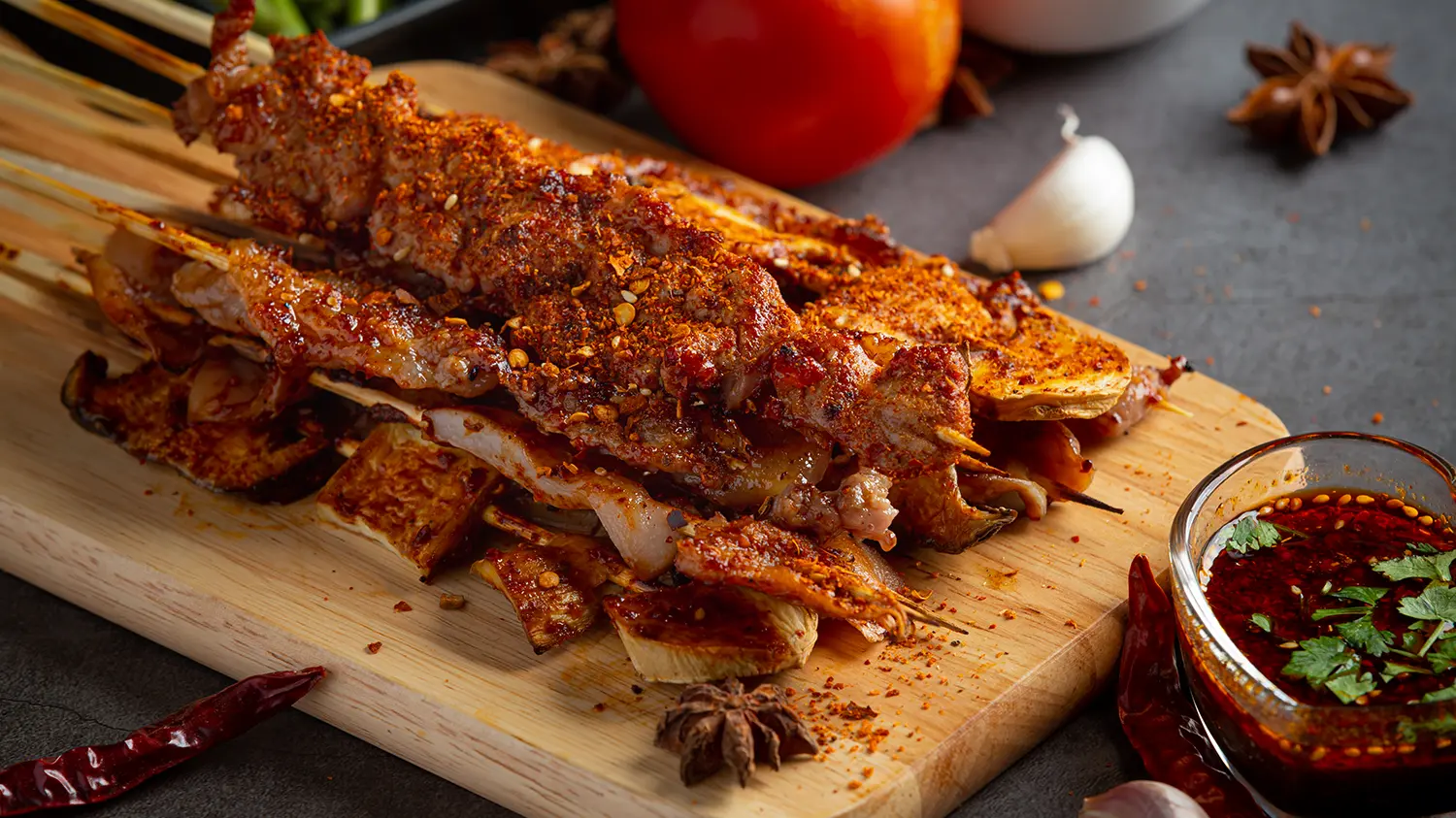
Moo Ping is the ultimate Thai breakfast on the go. These are skewers of pork shoulder marinated in coconut milk, garlic, coriander root, and black pepper, then grilled over hot coals.
- The Detail: The smoke from the charcoal is what makes or breaks a good skewer. Look for vendors who have a steady line of motorbikes pulling over; they have the best marinade.
- Price: 7–15 THB per skewer. A small bag of sticky rice is usually 5–10 THB.
5. Khao Soi (ข้าวซอย)
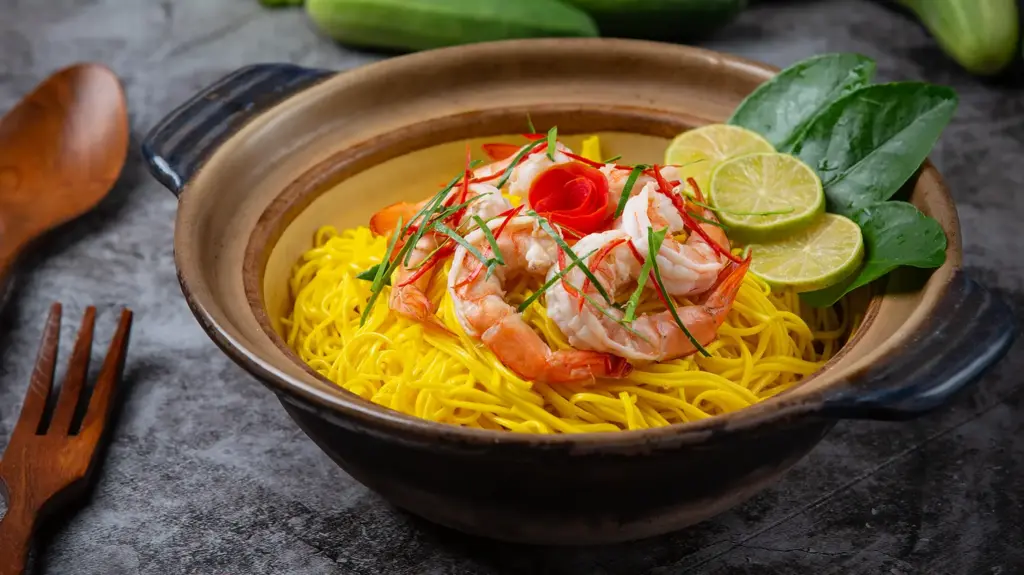
While native to Northern Thailand (Chiang Mai and Chiang Rai), Khao Soi has become a street staple across the country. It is a rich, coconut milk-based curry soup served with soft egg noodles and topped with a crown of crispy fried noodles.
- The Flavor Profile: It leans toward the sweeter, aromatic side with hints of cardamom and turmeric.
- The Garnish: It is always served with a side of pickled mustard greens, raw shallots, and a wedge of lime to cut the richness.
- Price: 50–85 THB.
6. Khao Man Gai (ข้าวมันไก่)
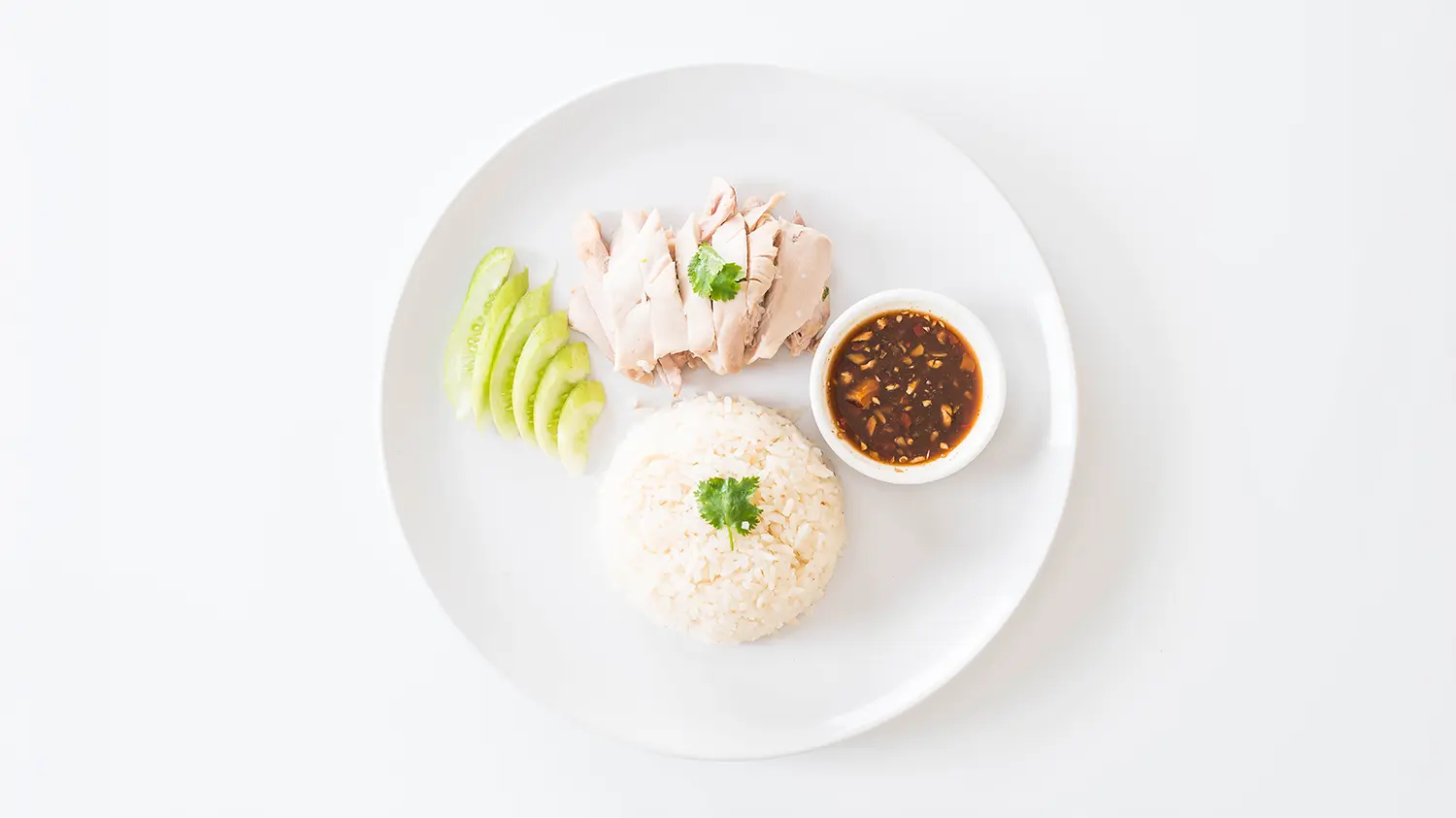
This is the Thai evolution of Hainanese Chicken Rice. It sounds simple—poached chicken over oily rice—but the secret is in the Nam Chim (dipping sauce). A good stall lives or dies by its fermented soybean, ginger, and chili sauce.
- The Nuance: The rice is cooked in chicken fat and broth, making it incredibly fragrant. It’s often served with a clear winter melon soup.
- Price: 45–60 THB.
7. Pad See Ew (ผัดซีอิ๊ว)
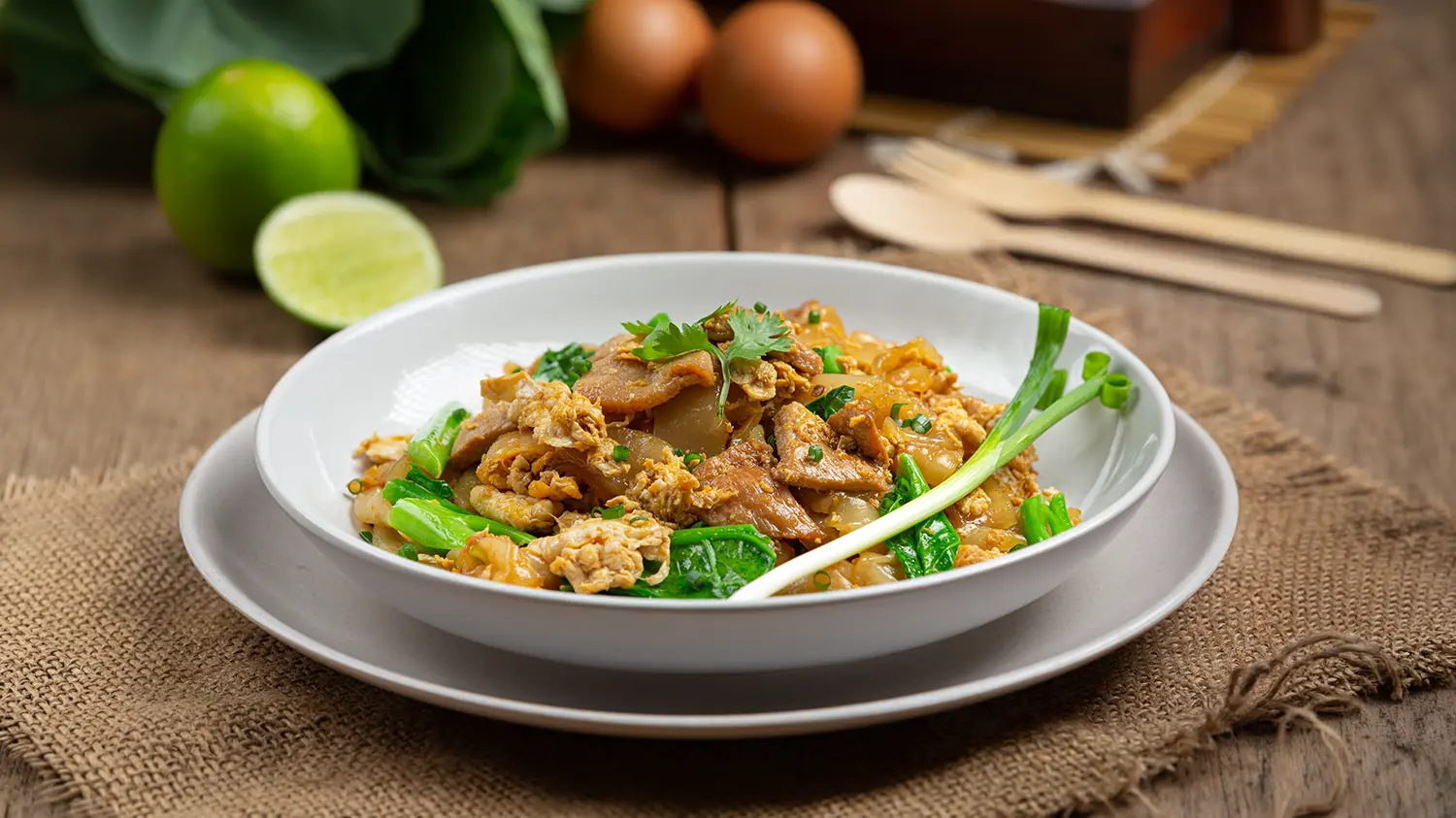
If you find Pad Thai too sweet, Pad See Ew is your answer. It uses wide, flat rice noodles (Sen Yai) stir-fried in a hot wok with dark soy sauce, Chinese broccoli (Gai Lan), egg, and meat.
- The Secret: The goal is Wok Hei (breath of the wok)—a slightly charred, smoky flavor that only comes from cooking over a massive flame.
- Price: 50–70 THB.
8. Jok (โจ๊ก)
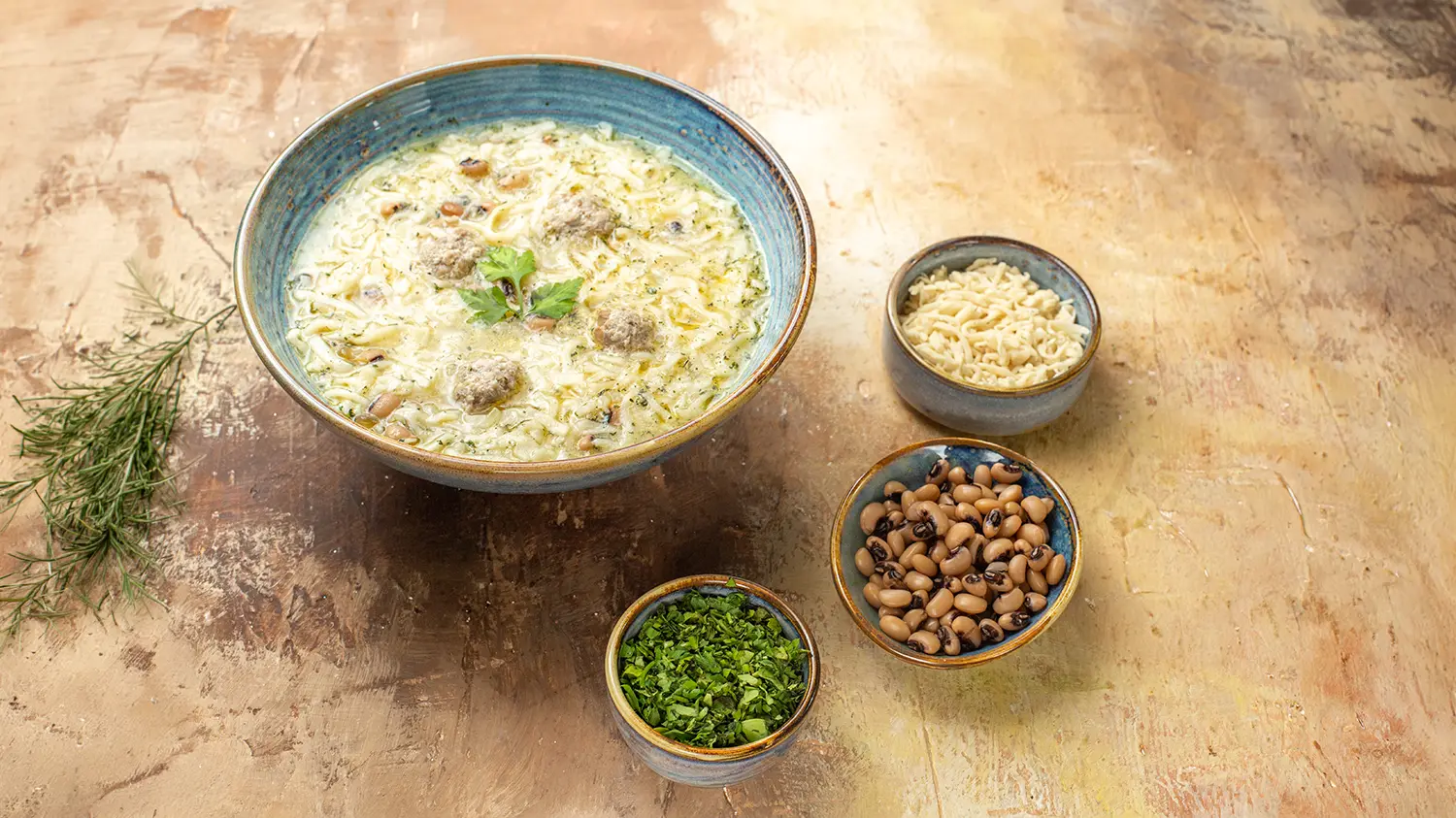
Jok is the Thai version of congee (rice porridge). It is the quintessential comfort food, usually eaten late at night or early in the morning. It features a thick, smooth rice base, ginger slivers, spring onions, and handmade pork balls.
- The Pro Move: Ask for a Kai Kem (salted egg) or a raw egg cracked into the boiling porridge to add a rich, velvety texture.
- Price: 40–55 THB.
9. Sai Oua (ไส้อั่ว)
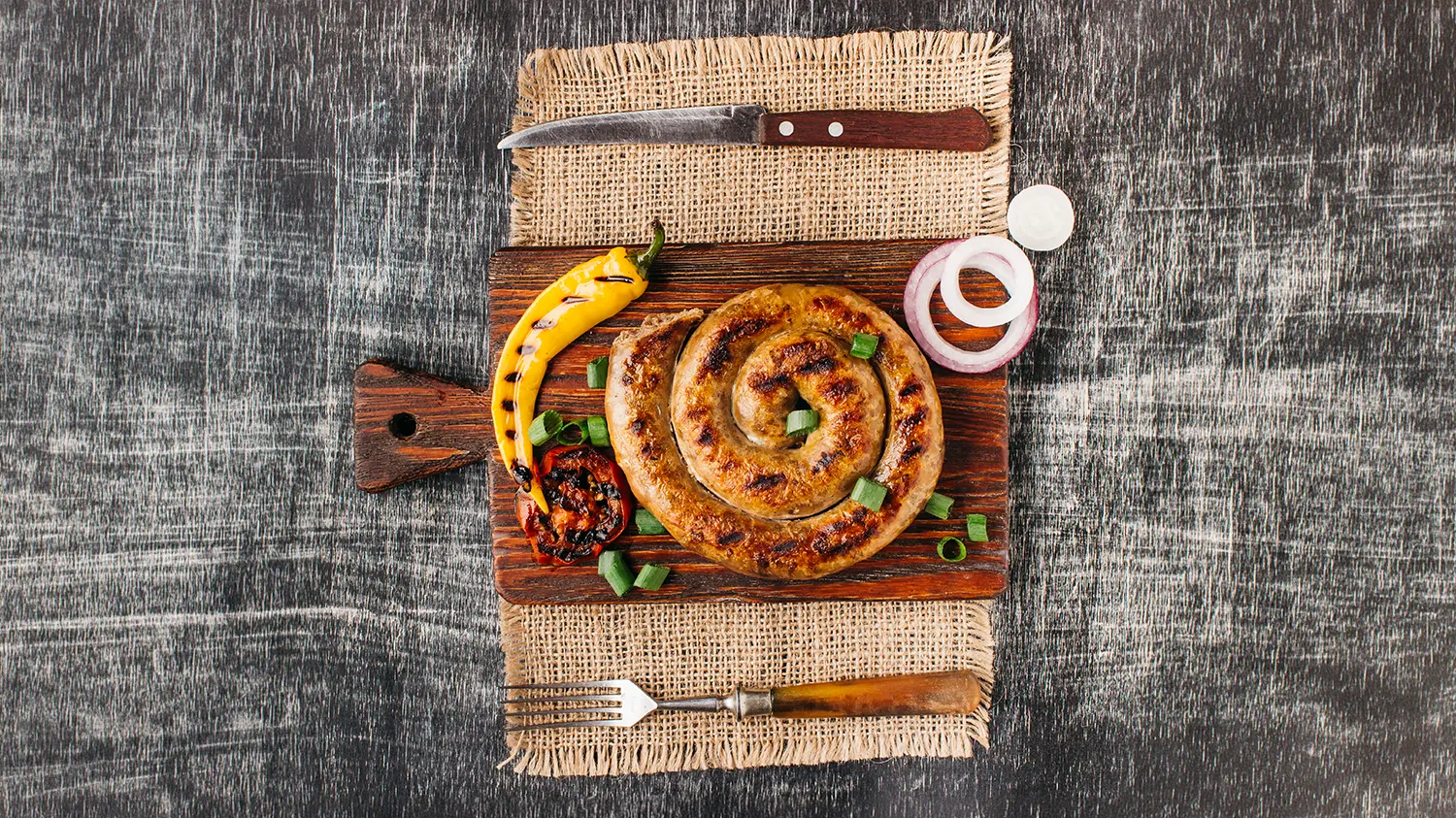
Another Northern powerhouse, Sai Oua is a grilled herbal sausage. Unlike Western sausages, this is packed with lemongrass, galangal, kaffir lime leaves, and red curry paste.
- The Experience: It’s aromatic and has a creeping heat. You can find it at almost any street market in Chiang Mai, usually sold by the coil or sliced into bite-sized pieces.
- Price: 30–50 THB per portion.
10. Khao Niew Mamuang (ข้าวเหนียวมะม่วง)
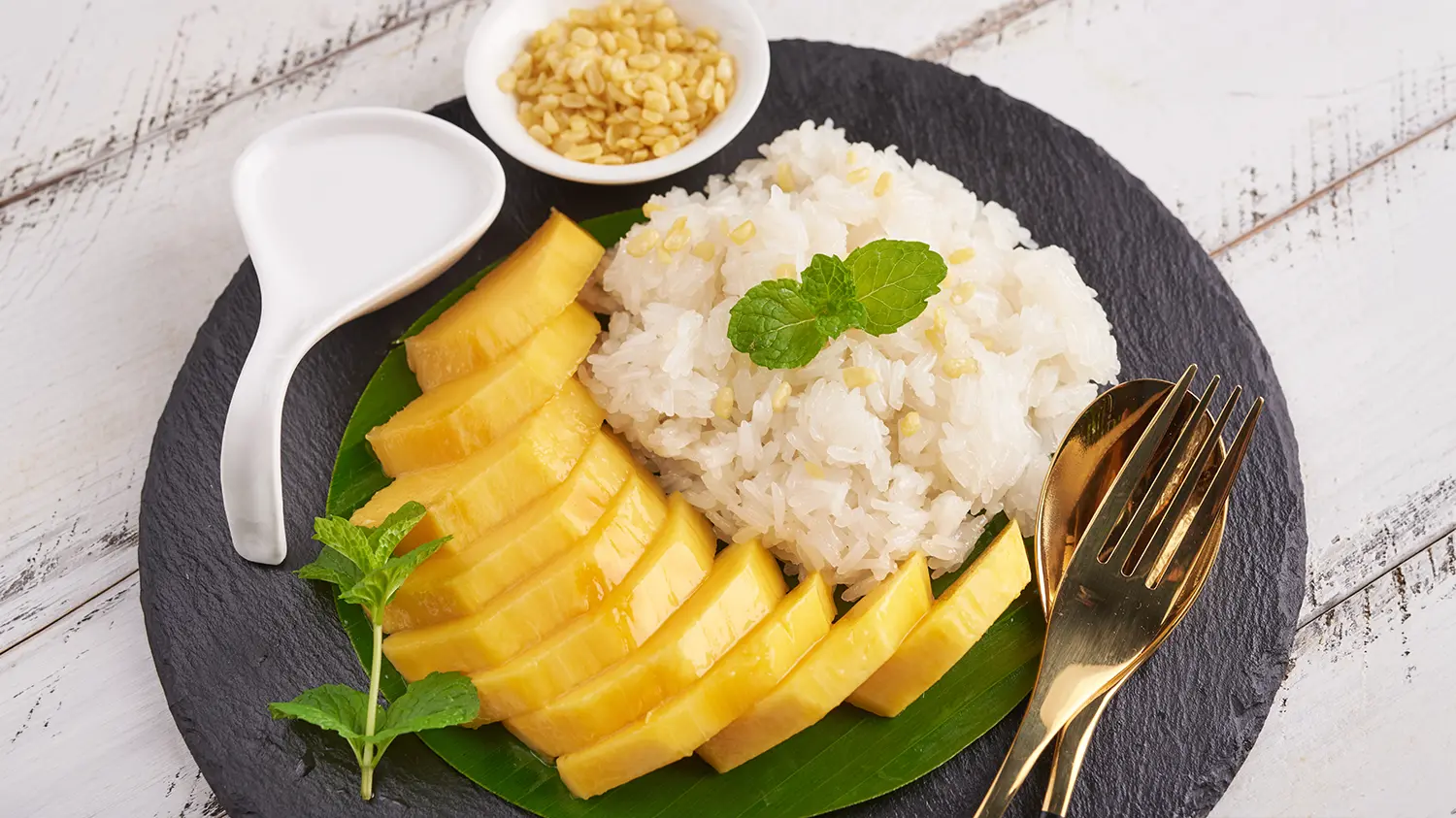
Mango Sticky Rice is the only way to end a street food crawl. It consists of warm glutinous rice steamed with coconut milk and sugar, paired with slices of chilled, ripe Nam Dok Mai mango.
- Seasonal Tip: While available year-round, the peak season for the sweetest mangoes is March to June.
- Price: 60–120 THB (Price fluctuates based on mango quality and size).
Frequently Asked Questions
Is Thai street food safe for travelers in 2026?
Yes. Look for stalls with high turnover (lots of customers) and food cooked to order at high heat. Avoid pre-cut fruit that isn’t on ice or buffets where the food has been sitting out.
How do I pay at a street stall?
While many stalls now accept PromptPay (QR codes), most still prefer cash for small transactions under 100 THB. Always carry small bills (20s and 50s).
How do I ask for “not spicy”?
Say “Mai Phet” (Not spicy) or “Phet Nid Noy” (A little spicy). Be warned: “A little spicy” in Thailand still carries a significant kick for most Western palates.
What is the best time to find street food?
While breakfast stalls (Moo Ping, Khao Man Gai) open at 6:00 AM, the most diverse “street food markets” usually come alive after 6:00 PM.
Do I need to tip at street stalls?
No. Tipping is not expected at roadside stalls or simple shophouses. If you are in a high-end “street food” restaurant with air conditioning, a small tip is appreciated but never mandatory.
Final Thoughts
Thai street food is an exercise in organized chaos. Don’t be intimidated by the plastic stools or the lack of English menus; the best meals are often found where the menu is just a few pictures on a wall. By moving beyond Pad Thai and embracing regional dishes like Khao Soi or the everyday Phat Kaphrao, you gain a genuine understanding of the Thai palate.