Navigating Suvarnabhumi Airport: The 2026 Arrival Survival Guide
Touching down at Suvarnabhumi Airport (BKK) can feel like a fever dream. Between the humidity that hits you at the jet bridge and the sheer scale of the terminal, it’s easy to make a wrong turn. Since the full integration of the SAT-1 Satellite Terminal and the mandatory Thailand Digital Arrival Card (TDAC), the process has changed.
This is the ground-level reality of arriving in Bangkok in 2026. Forget the generic advice; here is how to navigate the terminal like a local and avoid the overpricing that traps first-time arrivals.
Phase 1: The Arrival Flow (SAT-1 to Immigration)
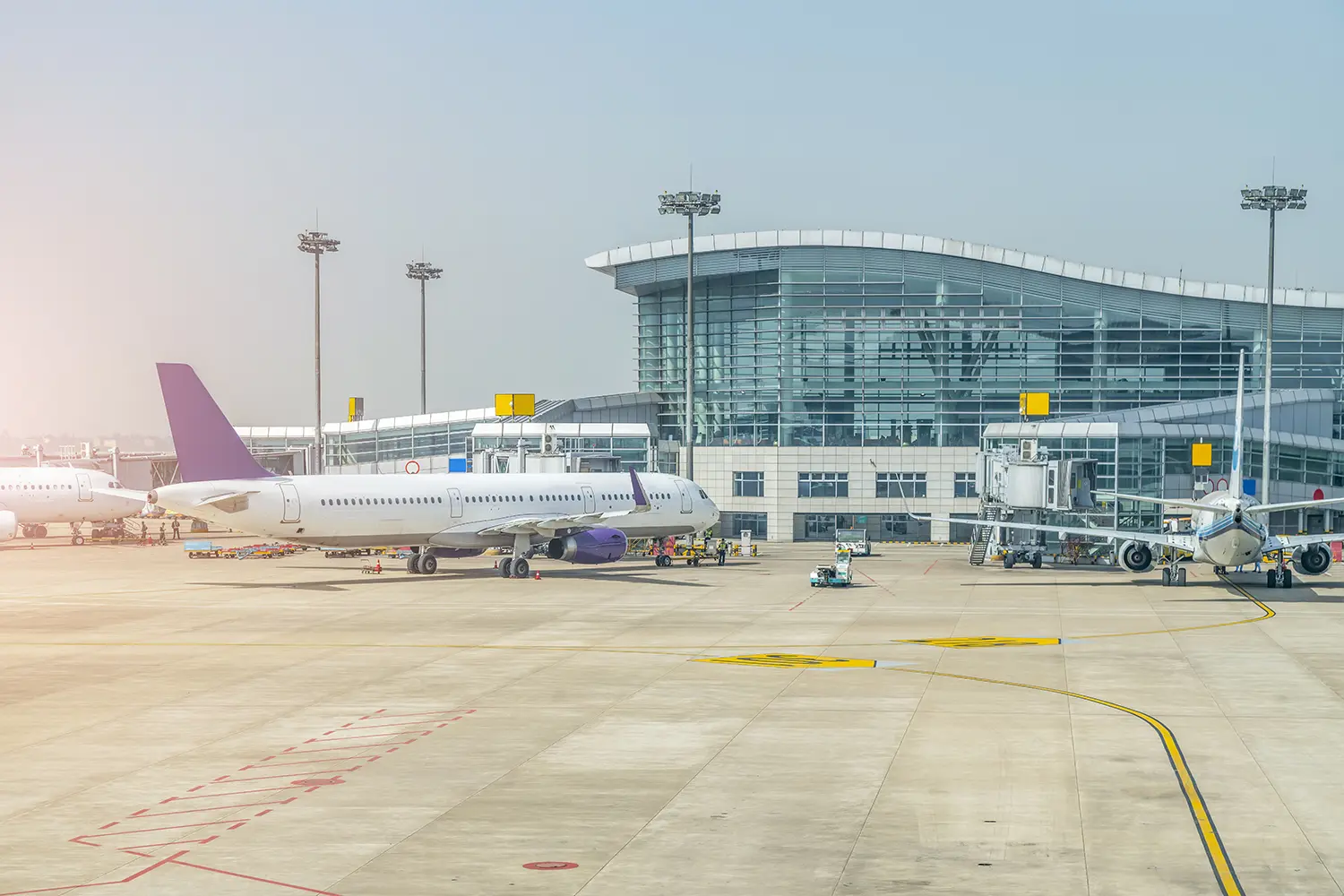
The first thing you need to know is where you actually landed. With the 2026 expansion, many international flights now park at the SAT-1 Satellite Terminal.
The Automated People Mover (APM)
If your gate is in the S101–S128 range, you are in the satellite building. You cannot walk to the main terminal. You must take the APM (Automated People Mover).
- Location: Follow the “Arrivals” signs to the basement of the SAT-1 building.
- Frequency: Trains run every 3 minutes.
- Travel Time: It is a 2-minute ride to the Main Terminal.
- Pro Tip: Don’t linger. The crowds from a single A380 can clog the APM platform quickly. Move to the front of the train to exit nearest the escalators at the main terminal side.
The Thailand Digital Arrival Card (TDAC)
As of 2026, the old paper blue-and-white TM6 forms are gone. Every non-Thai national must have a Thailand Digital Arrival Card (TDAC).
- Definition: The TDAC is a mandatory digital entry registration that must be completed online within 3 days of arrival.
- The Checkpoint: Immigration officers will scan your passport, which is now linked to your digital filing.
- The “Oops” Kiosk: If you forgot to do this, there are kiosks before the immigration lines. Avoid them at all costs—the lines are long, the UI is clunky, and you will lose 30 minutes of your life.
Phase 2: Immigration and Customs
There are two main immigration halls: Immigration 2 and Immigration 3. They lead to the same baggage claim area, so choose the one with the shorter line.
Fast Track and Special Queues
- Priority Lane: This is strictly for Business/First Class passengers (you need a voucher from your airline), APEC cardholders, and those with Thailand Privilege (formerly Elite) visas.
- Elderly/Family Lane: If you are over 70, pregnant, or traveling with infants, look for the designated signs. The staff are generally very efficient at pulling you out of the main line.
- E-Gates: In 2026, more nationalities (including UK, EU, and Australian passport holders) are being trialed for the automated E-Gates. If the signage indicates your country, use them. It cuts the wait from 40 minutes to 40 seconds.
The Cash Requirement (The 20,000 Baht Rule)
Legally, you are required to show proof of funds (20,000 THB or equivalent in foreign currency). While rarely checked for tourists on short stays, officers have become stricter with those on back-to-back visa exemptions. Carry some “emergency” USD or EUR in high-denomination bills just in case.
Phase 3: Money, SIM Cards, and Connectivity
Once you clear customs and enter the Arrivals Hall (Level 2), you will be swamped by bright booths. Do not buy anything here.
The “Basement Secret” for Currency Exchange
The exchange booths on Level 2 (mostly commercial banks like SCB or Kasikorn) offer poor rates.
- The Move: Take the elevator down to Level B (Airport Rail Link floor).
- The Target: Look for Superrich (Orange or Green) or Value Plus.
- Information Gain: The difference between a booth on Level 2 and Superrich on Level B can be as much as 300–500 THB per $100 exchanged.
- Note: These booths close around 11:00 PM. If you arrive late, only change enough for a taxi (about 1,000 THB) and wait until you’re in the city for the rest.
SIM Cards: eSIM vs. Physical
While Level 2 has AIS, DTAC, and TrueMove booths, they only sell overpriced “Tourist SIMs.”
- Better Way: If your phone supports it, buy an eSIM (via Airalo or Nomad) before you land.
- Local Way: If you need a physical SIM, go to the 7-Eleven on Level B. They sell standard SIM cards that are significantly cheaper than the “Tourist” packages sold upstairs.
Phase 4: Getting to the City
This is where most travelers get stressed. You have four primary options.
1. The Airport Rail Link (ARL) – The Smart Choice
- Location: Level B.
- Cost: 15–45 THB depending on the stop.
- Speed: 26 minutes to Phaya Thai (BTS Interchange).
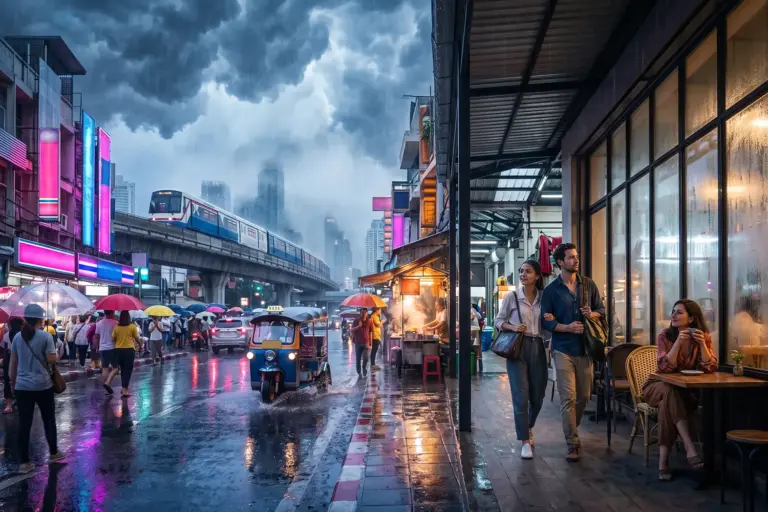
- Why it matters: Bangkok traffic is legendary. Between 4:00 PM and 8:00 PM, a taxi can take two hours. The train takes 30 minutes regardless of the gridlock.
2. Official Public Taxis
- Location: Level 1 (one floor below Arrivals).
- The System: Use the touchscreen kiosks to get a ticket. It will show a “Lane Number.” Go to that lane and find your taxi.
- The True Cost:
- Meter Fare: Usually 250–400 THB to the city center.
- Airport Surcharge: 50 THB (Always added to the meter).
- Tolls: Usually two tolls (25 THB and 50 THB). You pay these in cash to the driver or have them added to the final bill.
- Warning: If a driver asks for a “flat price,” politely say “Meter, please” (Chai meter khrap/ka). If they refuse, show them the ticket you got from the kiosk—it has a complaint number.
3. Ride-Hailing (Grab, Bolt, Indrive)
- Pick-up Point: This has changed. You can no longer meet Grab drivers at the Arrivals curb. You must go to the designated Ride-Hailing Pick-up Area on Level 1.
- Comparison: Bolt is usually cheaper but drivers might try to negotiate. Grab is more professional but can be more expensive than a public taxi during surge pricing.
4. The Limo Services
- Location: Level 2 (Inside the terminal).
- Cost: 1,200 THB+.
- Verdict: Only worth it if you are a large group needing a van or if you simply want a stress-free, “no questions asked” luxury experience.
Level 2 vs. Level B: A Quick Reference
| Service | Level 2 (Arrivals) | Level B (Basement) | Recommendation |
| Currency Exchange | Poor Rates (Bank Booths) | Best Rates (Superrich) | Go to Level B |
| Food | High-end Cafes / Chains | Magic Food Point (Level 1) | Go to Level 1 |
| SIM Cards | Expensive Tourist Packs | 7-Eleven / Kiosks | eSIM or Level B |
| Transport | Limos / Hotel Pickups | Rail Link / Public Taxis (L1) | Level B or Level 1 |
Frequently Asked Questions
Can I sleep at Suvarnabhumi Airport?
Yes. For a few hours of sleep, use Boxtel or Avagard Capsule Hotel on Level B. They offer small, clean “pods” by the hour. If you need a full hotel, the Novotel Suvarnabhumi is a 5-minute walk via an underground walkway.
Is there a free shuttle between Suvarnabhumi (BKK) and Don Mueang (DMK)?
Yes. It is located on Level 2, Gate 3. You must show a valid flight ticket departing from Don Mueang for that day or the next morning to use it.
Where is the “Magic Food Point” everyone talks about?
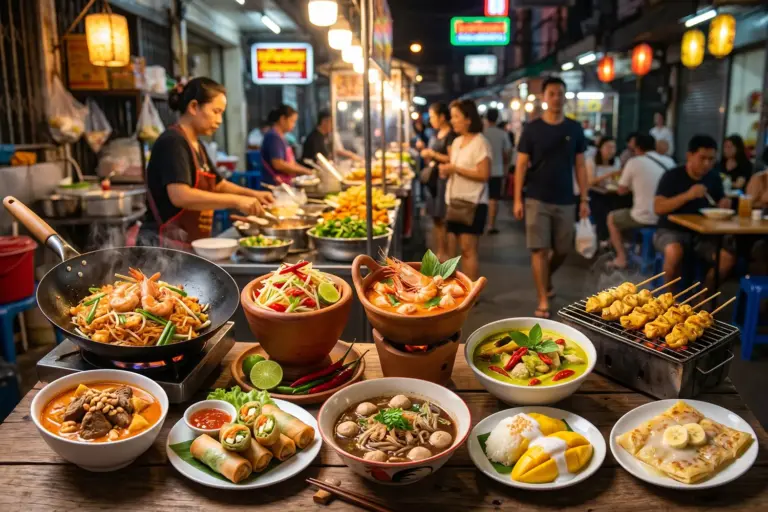
It’s on Level 1, Gate 8. This is the staff canteen. You buy coupons first, then trade them for food. It is the cheapest and most authentic meal you will find in the airport (dishes for 50–80 THB).
What happens if I lose my luggage?
Go to the Lost and Found counter located near Baggage Claims 5 and 6 before you exit Customs. If you have already exited, you will need to go to the AOT office on Level 4 (Departures).
Are there smoking rooms in the airport?
No. As of 2026, all indoor smoking rooms in Thai airports have been closed. You must exit the terminal and find a designated smoking zone on the curb of Level 1 or Level 4.
Final Thoughts
Surviving Suvarnabhumi is about descending. The higher you are in the building, the more you pay. Arrivals are on Level 2, but the value is on Level 1 (Food and Taxis) and Level B (Trains and Currency). Complete your TDAC before you fly, keep your toll money ready, and don’t be afraid to take the train to beat the Bangkok “Stall.”